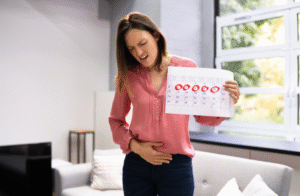
Period pain, or dysmenorrhea, causes throbbing or cramping sensations during a woman’s period. These symptoms can be intense and disruptive. By exploring various relief options, such as lifestyle changes and period pain treatment, you can reduce the symptoms of period pain, improving your comfort and well-being during your menstrual cycle.
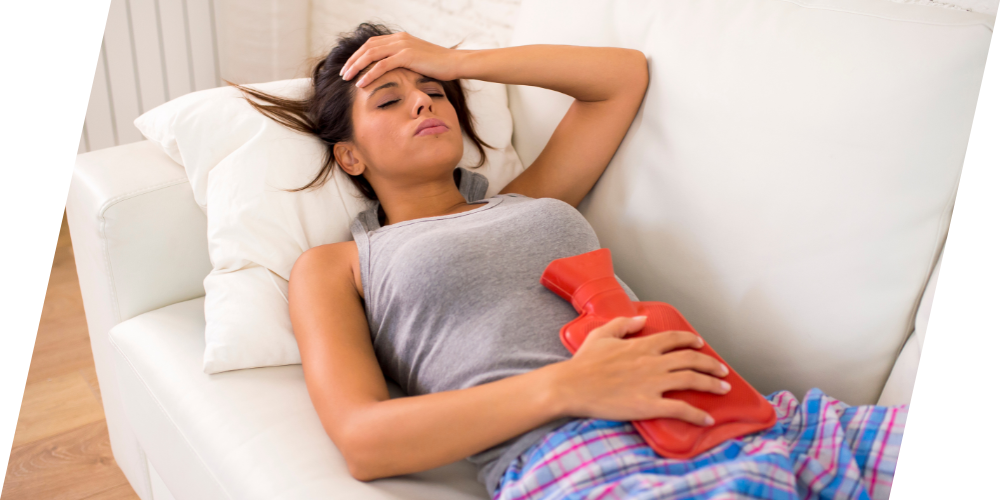
Period pain is often accompanied by a range of other symptoms that can affect how someone feels during their cycle.
These may include bloating, headaches, fatigue, nausea, and changes in bowel habits such as diarrhoea. Some people may also experience lower back pain or general discomfort throughout the body.
The combination and severity of symptoms can vary, with some cycles feeling more manageable than others.
Period pain is considered severe when it goes beyond typical cramping and begins to interfere with daily life.
Pain that prevents normal activities, causes missed work or school, or does not improve with standard pain relief may indicate a more serious issue. In some cases, the pain may worsen over time or be accompanied by heavy or irregular bleeding.
Severe symptoms may be linked to underlying conditions and may require further assessment.
Although period pain is common, certain medical conditions can make symptoms more intense or persistent.
Conditions that may be linked to more severe pain include:
These conditions can affect how the uterus functions and may lead to ongoing discomfort beyond the menstrual period.
Hormones play a key role in the development of period pain. Fluctuations in hormone levels throughout the menstrual cycle can influence how strongly the uterus contracts.
Higher levels of prostaglandins are associated with more intense cramping, which is why pain can vary between individuals and even between cycles.
Hormonal changes can also affect other symptoms, such as mood, energy levels, and appetite.
Period pain is common during the early years of menstruation and may be more noticeable in teenagers.
This is often linked to higher prostaglandin levels and the body adjusting to regular menstrual cycles. Pain may improve over time as cycles become more consistent.
Supportive measures and appropriate pain relief can help manage symptoms and reduce disruption to daily activities such as school or sports.
Keeping track of period pain and related symptoms can help identify patterns and support better management.
Recording when pain starts, how long it lasts, and how severe it feels can provide useful insight. Noting any additional symptoms or triggers can also help build a clearer picture over time.
This information can be helpful if further advice is needed, as it supports more accurate assessment and treatment planning.
Period pain often begins just before or at the start of a menstrual period. For many people, discomfort develops as the uterus starts contracting to shed its lining.
Pain is usually most noticeable during the first one to two days of the period, when hormone levels are highest. It may ease as the flow becomes lighter and prostaglandin levels reduce.
The timing and intensity can vary, with some people experiencing pain earlier or later in their cycle.
Experiencing cramps without an active period can happen and may be linked to other stages of the menstrual cycle.
Ovulation can cause mild lower abdominal pain in some people, often felt on one side. Hormonal changes throughout the cycle may also lead to temporary discomfort.
In some cases, pain outside of a period may be linked to underlying conditions or other causes, especially if it is persistent or severe.
Daily habits and lifestyle factors can influence how period pain is experienced.
Lack of sleep, high stress levels, and poor diet may contribute to increased discomfort. Staying active, maintaining regular sleep patterns, and keeping hydrated can help support overall wellbeing during the menstrual cycle.
Small changes in routine may help reduce the intensity of symptoms over time.