


It’s completely natural to see a few hairs on your pillow or brush each day. Hair continually renews itself, and that means some daily shedding is normal for everyone. Most people experience what’s called normal daily hair shedding, where older strands fall out to make room for new ones.
If you’ve been wondering how much hair loss is normal, the answer is usually reassuring. Everyone’s pattern is slightly different depending on age, texture, and styling habits. Here, we explain what average hair shedding looks like and when hair loss might be concerning enough to seek advice.
Understanding the Natural Hair Growth Cycle
Every strand of hair grows, rests, and eventually sheds as part of a repeating cycle that keeps your scalp healthy. Most hairs spend several years in the growth phase, known as anagen, where they steadily lengthen.
The next stage, catagen, is a short transition where growth slows, preparing the strand to move on. Finally, the resting and shedding stage, telogen, allows older hairs to release so new ones can take their place.
Shedding happens when those telogen hairs naturally detach, often during washing or brushing. That’s why normal daily hair shedding is part of how the scalp renews itself. Changes in hormones, stress, or nutrition can sometimes shift more hairs into the resting phase, which may lead to temporary thinning.
These changes are common and usually settle over time, but understanding the cycle helps make sense of what’s typical for your own pattern of hair growth.
Daily Hair Shedding: What’s Considered Typical
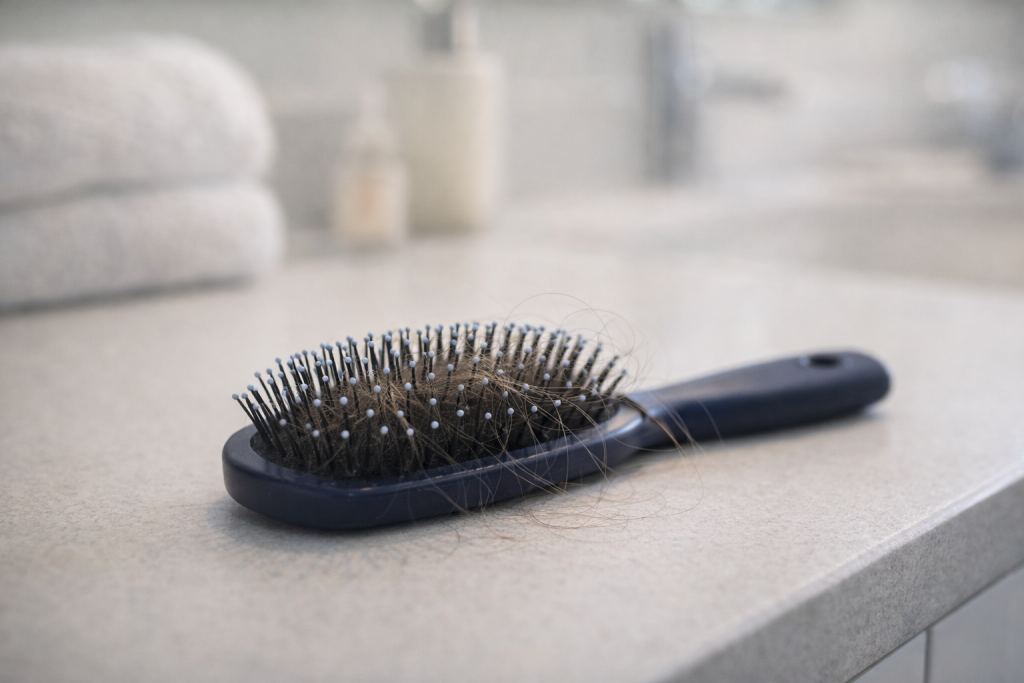
Most people lose between fifty and one hundred hairs a day, which might sound like a lot, but is usually nothing to worry about. This is considered average hair shedding and part of the body’s normal renewal process.
You may notice a few strands in the shower or on your clothes, especially after brushing or washing, when loose hairs are more likely to fall away.
The amount can vary slightly from person to person. Those with thicker or longer hair might think they are losing more, simply because each strand is more visible.
Seasonal changes or mild stress can also affect normal daily hair shedding, but these shifts tend to balance out over time. The key is consistency. If shedding increases suddenly or you start seeing hair thinning signs that persist, it might be time to check when hair loss is concerning for you.
Differences Between Men and Women
Hair growth and shedding patterns often vary between men and women, largely because of hormonal influence. Men typically experience gradual thinning at the crown or hairline, known as male hair loss patterns. Women, on the other hand, tend to notice more diffuse thinning across the scalp, often referred to as female hair loss patterns.
These changes can appear slowly and may become more noticeable with age or at times of hormonal change, such as pregnancy or menopause. Lifestyle, diet, and stress can also play a part in how the cycle behaves. While mild thinning is common, sudden changes or visible patches may need a closer look. For most people, though, these variations are simply part of how hair naturally responds to the body’s rhythm rather than a sign of lasting loss.
Signs Your Hair Loss May Be Abnormal
Everyone sheds hair, but certain changes might suggest it’s worth seeking professional advice. While this article can’t diagnose the cause, here are a few signs that hair loss might need more attention:
- Hair coming out in large clumps when washing or brushing
- Round or patchy areas where hair appears thinner or missing
- Sudden or rapid thinning across the scalp
- Redness, itching, or soreness in areas of loss
- Noticeable shedding after major life events such as illness, childbirth, or high stress
These patterns can sometimes relate to temporary changes in the body or lifestyle. They do not always indicate a medical problem, but persistent or worsening loss is a reason to ask for guidance. Knowing when hair loss is concerning can help you feel more in control and find the right type of support.
Factors That Can Increase Shedding
Hair shedding can rise for many everyday reasons. Stress is one of the most common causes of increased shedding, often linked to temporary changes in the growth cycle. Nutritional gaps, restrictive diets, or low iron and protein can also affect hair strength. Hormonal shifts, illness, or certain medicines may lead to similar patterns.
External habits like smoking, poor sleep, or frequent heat styling can make hair appear thinner over time. In most cases, these changes are short-term and improve once balance returns, especially with healthy routines and consistent scalp care.
When to Consult a Clinician Through WePrescribe
If you’ve noticed shedding that continues for several months or feels unusual for you, it might help to speak with a qualified clinician. Ongoing loss that causes stress, affects your confidence, or seems to be getting worse deserves professional attention. Sometimes the pattern or texture of your hair changes gradually, making it difficult to tell what’s normal and what might need support.
Through WePrescribe, you can access confidential online consultations at a time that suits you. These appointments are designed to offer reassurance, discuss possible contributing factors, and guide you towards safe, evidence-based management options. Even if the issue turns out to be mild, having clear professional input can bring peace of mind and help you understand your hair’s natural rhythm better.
Treatment and Management Options Available Online
There are practical ways to support healthy hair without using medical products. Eating a balanced diet with enough protein, iron, and zinc helps keep hair strong, while staying hydrated and sleeping well also makes a difference. Gentle scalp care, such as regular washing and avoiding harsh products, supports natural renewal.
Online consultations through WePrescribe offer a safe space to discuss your concerns and explore suitable lifestyle and care options. Small changes, like managing stress or limiting heat styling, can often help reduce shedding and keep your hair in its best possible condition.
Some hair loss is entirely normal and simply part of how the body renews itself. When shedding feels different or begins to affect your confidence, it can help to speak with a professional.
Our pharmacists at WePrescribe offer a discreet, online space to discuss your concerns and explore supportive options. Getting expert advice can help you understand your hair’s pattern more clearly and feel reassured about what’s happening.