

Seasonal allergic rhinitis, more commonly called hayfever, affects a lot of people across the UK each year. Pollen triggers the immune system, histamine gets released, and that response can lead to symptoms that feel pretty constant.
You might notice:
- Frequent sneezing
- Itchy or watery eyes
- A blocked or runny nose
- Sinus pressure or mild headaches
If you’re searching for foods to help hayfever, it helps to keep expectations realistic. Food cannot cure hayfever, and it cannot switch off an allergic response. What it might do, for some people, is support the body’s usual handling of inflammation and histamine activity.
Evidence around a supportive hayfever diet is still developing, and results vary between individuals. So think of this as one part of a wider plan, alongside practical steps like checking pollen forecasts, reducing exposure where you can, and using clinically appropriate treatments if symptoms start to disrupt sleep, work or day-to-day life.
Apples
Apples are often mentioned among quercetin foods. Quercetin is a plant compound with antioxidant activity, and it has been studied for its potential influence on mast cells, which are involved in histamine release.
Histamine drives many hayfever symptoms, including sneezing, itch and watery eyes. So, in theory, compounds that support histamine regulation could be helpful. The reality is a bit more nuanced, because much of the research looks at concentrated quercetin rather than the amounts found in whole foods.
Still, apples are an easy, low-effort option to include regularly:
- Eat them with the skin on, as quercetin is higher there
- Slice into porridge or yoghurt
- Chop into salads for crunch
- Pair with nut butter as a snack that feels more filling
Ginger
Ginger contains naturally occurring compounds such as gingerols, which have been studied for anti-inflammatory effects. Inflammation contributes to nasal swelling and sinus pressure during allergy season, so ginger may offer gentle support for some people.
There’s also interest in how ginger might influence immune signalling, which is why it appears in discussions around natural remedies for hayfever. Human evidence is still limited, though, so it’s best seen as supportive rather than a direct symptom fix.
Practical ways to use it:
- Fresh ginger grated into soups and stir-fries
- A small amount blended into smoothies
- Ginger tea, especially if you want something warm and soothing
If you take blood-thinning medicines, it’s sensible to check with a clinician before significantly increasing ginger intake, as ginger can affect clotting for some people.
Turmeric
Turmeric contains curcumin, a compound researched for its anti-inflammatory activity. Because hayfever symptoms involve inflammation in the lining of the nose and eyes, curcumin is sometimes discussed as part of an anti-inflammatory foods approach.
Some early studies suggest curcumin may influence inflammatory markers linked with allergic responses. Evidence is not yet strong enough to make firm claims, yet food-based use is a reasonable starting point for many people.
A practical detail that often gets missed is absorption. Curcumin is typically better absorbed when paired with black pepper, which contains piperine.
Easy ways to include turmeric:
- Add to curries, soups and lentils
- Stir into scrambled eggs or roasted veg seasoning
- Mix into warm milk drinks if that suits you
Supplements exist, but food use keeps things simpler, and it also avoids jumping straight to high doses.
Salmon
Salmon is rich in Omega-3 fatty acids, particularly EPA and DHA. Omega-3s have been studied for their role in supporting inflammatory balance, and that’s why they show up in discussions around Omega-3 allergies.
Inflammation contributes to congestion and irritation, so Omega-3 intake may support the body’s broader inflammatory response. Evidence is mixed, though, and effects can be subtle.
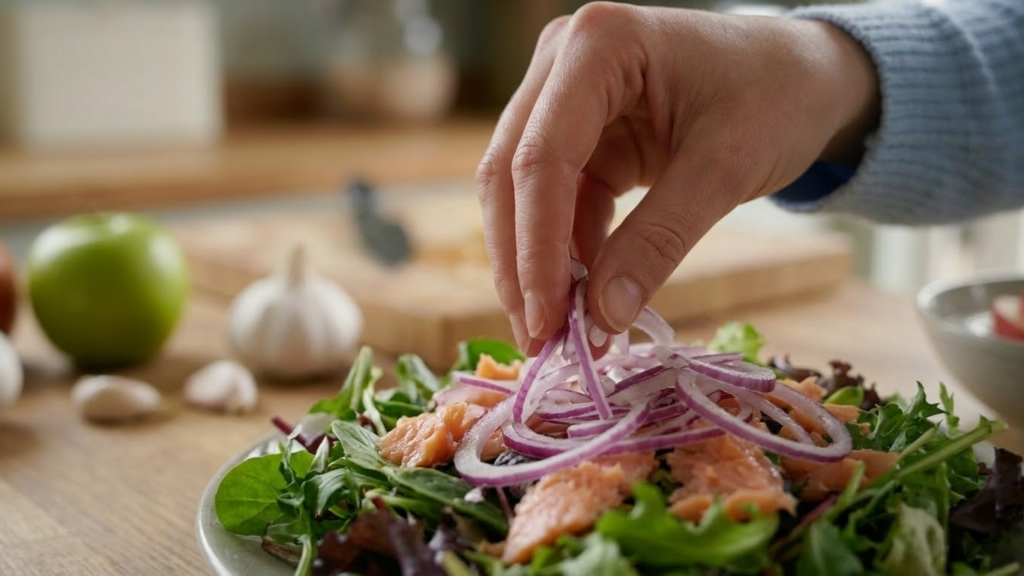
If you eat fish, a practical target is two portions of oily fish per week, which supports overall health as well.
If you prefer not to eat fish, plant-based omega-3 sources include:
- Flaxseeds
- Chia seeds
- Walnuts
Plant Omega-3s are mainly ALA, which the body converts to EPA and DHA at varying rates, so results differ between people.
Onions
Onions are another of the better-known quercetin foods, with red onions often highlighted for higher concentrations. Quercetin has been studied for its potential influence on histamine release and inflammatory signalling, which is why onions are sometimes included in a hayfever diet.
A practical point is that cooking can reduce quercetin content. Lightly cooked onions still have value, yet raw onion tends to retain more.
Simple ways to include onions without making meals complicated:
- Finely sliced in salads or wraps
- Added to grain bowls
- Mixed into salsas or yoghurt-based dressings
If raw onion feels a bit strong, lightly pickling it can make it easier to eat while keeping a fresher texture.
Garlic
Garlic contains allicin, a compound produced when garlic is chopped or crushed. Allicin has been studied for anti-inflammatory and antimicrobial properties, and there’s ongoing interest in how it may affect immune activity. That’s why garlic often appears under immune support foods.
To be clear, evidence linking garlic directly to allergy symptom relief is limited. Still, garlic can fit naturally into a diet that supports overall immune and inflammatory balance.
To get more of the active compounds:
- Crush or chop garlic and let it sit for a minute before cooking
- Use fresh garlic rather than pre-prepared versions when possible
- Light cooking can preserve more compounds than high heat for longer periods
If garlic causes reflux or stomach upset for you, smaller amounts tend to work better.
Broccoli
Broccoli is a useful source of vitamin C, an antioxidant involved in normal immune function. Interest in vitamin C for hayfever often focuses on its role in reducing oxidative stress, which can amplify inflammatory reactions.
Vitamin C does not act like a direct antihistamine, yet diets rich in fruit and vegetables can support resilience during allergy season, partly through antioxidant intake.
Other cruciferous vegetables with similar benefits include:
- Kale
- Brussels sprouts
- Cabbage
Steaming lightly can help retain vitamin content while keeping the texture appealing. Overboiling tends to reduce both taste and nutrient value, which is annoying and avoidable.
Green Tea
Green tea contains catechins, antioxidant compounds studied for their effects on inflammatory pathways. Some early research suggests certain catechins may influence histamine-related activity, which is why green tea is sometimes suggested among foods for seasonal allergies.
Even without specific allergy benefits, swapping sugary drinks for green tea can be a practical change during pollen season. Hydration supports overall wellbeing, and dry mouth from congestion is common too.
A couple of practical notes:
- Green tea contains caffeine, usually less than coffee
- If you’re sensitive to caffeine, decaffeinated versions can be easier, especially later in the day
- If tea worsens reflux, a weaker brew can help
Yoghurt
Plain yoghurt with live cultures provides probiotics, which support gut microbiome balance. The gut and immune system are closely linked, so there’s growing interest in whether probiotics can influence allergic responses.
The evidence is mixed. Some studies suggest potential benefits in certain groups, while others show minimal change. Still, yoghurt can be a straightforward way to include fermented foods in a routine.
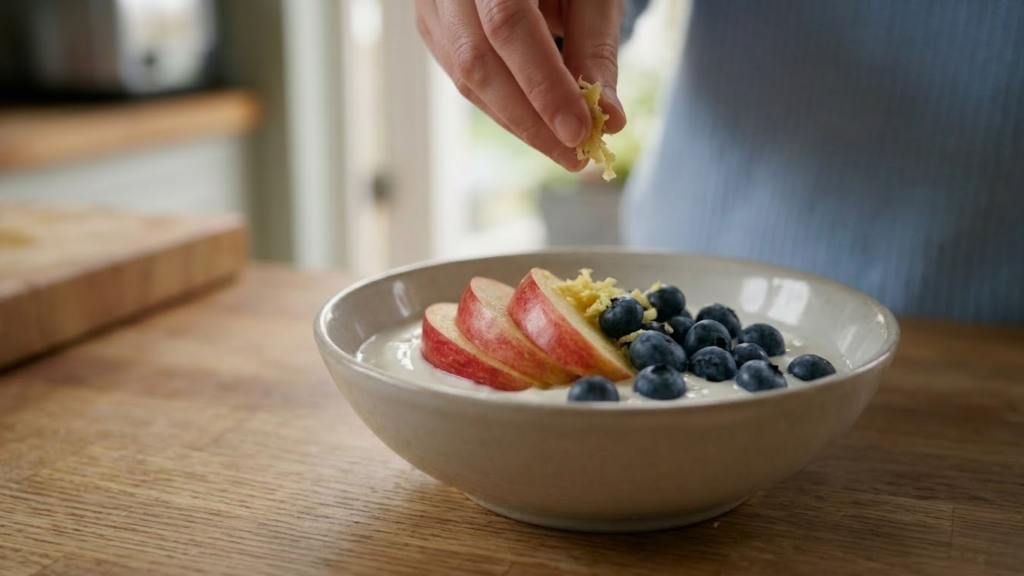
If you want to keep it simple:
- Choose plain yoghurt with live cultures
- Add berries, nuts or a small amount of honey rather than buying flavoured varieties
- Keep an eye on added sugar, as it adds up quickly
One caveat: some people feel that dairy increases mucus or irritation during allergy season. That’s not universal, but if symptoms feel worse after yoghurt, reducing intake for a couple of weeks can help you spot a pattern.
Berries
Berries such as strawberries, blueberries and raspberries provide antioxidants and vitamin C. These compounds help counter oxidative stress linked with inflammation, which is why berries often appear on lists of anti-inflammatory foods.
They’re also very easy to use:
- Add to breakfast bowls
- Blend into smoothies
- Eat as a snack that doesn’t need prep
If you’re building a diet around foods to help hayfever, consistency usually matters more than any single ingredient. A varied pattern across the week tends to do more than one “perfect” food eaten once.
Diet can complement medical care, yet it does not replace treatment when symptoms are persistent or disruptive. If sneezing, congestion or itchy eyes start affecting sleep or concentration, it may help to explore support options, including discreet online consultations for hayfever tablets. If you want tailored guidance, you can also contact us for a wider range of help and support.