

If you’ve found yourself searching why is my period late, you’re definitely not alone. Many people type this into Google every month, often feeling slightly worried, sometimes just confused.
A period is considered “late” based on your own cycle length, not a fixed calendar date. So if your cycle usually lasts 28 days and day 32 arrives with no bleeding, that could feel like a delay. If your cycle tends to vary, a few days either side might still fall within your normal range.
Menstrual timing depends on a finely regulated hormonal process. Ovarian hormones, stress signals, metabolic cues and overall health all interact in a way that is surprisingly sensitive. Even subtle changes in routine can shift ovulation, which then affects when bleeding begins.
Below, we look at common late period causes and explain when medical advice may be appropriate. If concerns continue, confidential clinical support is available, although many delays settle without treatment.
Stress And Emotional Factors
The menstrual cycle is regulated by the hypothalamic–pituitary–ovarian axis. The hypothalamus, a small but highly active part of the brain, releases signals that trigger ovulation. When stress increases, cortisol levels rise, and this can interrupt that signalling pathway.
A stress and late period pattern is actually very common. Acute emotional events such as bereavement, relationship changes, exams or sustained work pressure can delay ovulation. When ovulation shifts, bleeding shifts too.
Travel across time zones, disrupted sleep and jet lag can also interfere with hormonal rhythm. The body responds to perceived strain in a way that prioritises survival systems over reproduction, which makes biological sense.
An occasional period delay related to stress is usually self-limiting. Cycles often regulate once sleep improves and stress levels settle. Practical steps such as consistent sleep routines, moderate exercise and balanced meals may support hormonal stability over time, although change may take a cycle or two.
Hormonal Imbalances
Oestrogen and progesterone coordinate each stage of the menstrual cycle. Oestrogen prepares the uterine lining. Progesterone stabilises it after ovulation. When ovulation does not occur, or occurs later than expected, bleeding also shifts.
A hormonal imbalance period pattern can be associated with several conditions.
Polycystic ovary syndrome, commonly referred to as PCOS, can be linked with irregular ovulation. Thyroid disorders may also influence menstrual timing, as thyroid hormones interact closely with reproductive hormones.
Stopping hormonal contraception can temporarily disrupt cycle rhythm, too. After coming off the pill, the body resumes its own hormonal signalling, and this adjustment phase can involve irregular bleeding for several months. This is typically short term, although cycles can take time to stabilise.
If irregularity becomes persistent, significantly different from your baseline, or accompanied by other symptoms, clinical review may help clarify possible missed period reasons. Self-diagnosis often creates more anxiety than clarity.
Pregnancy
Pregnancy remains one of the most common missed period reasons. After implantation, the body produces human chorionic gonadotropin, which supports early development and prevents the uterine lining from shedding.
Some people notice early symptoms such as nausea, breast tenderness, fatigue or more frequent urination. Others experience virtually no early signs, which means a late period may be the only clue.
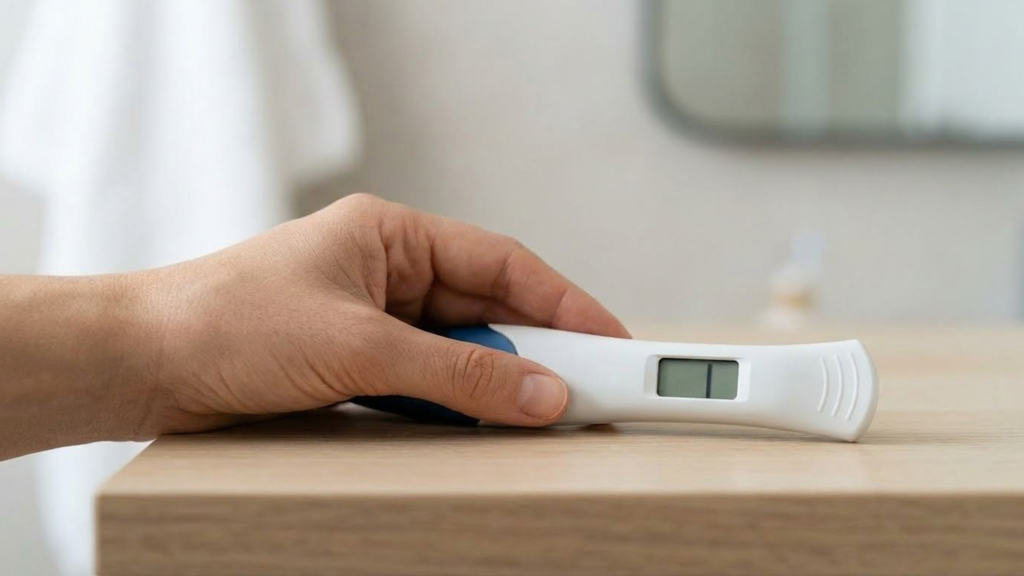
It is important to remember that symptoms alone cannot confirm pregnancy. Timing matters when testing, and taking a test too early can result in a false negative. If you are unsure when to take a pregnancy test, guidance below explains this in more detail.
A delayed period does not automatically mean pregnancy, yet it is sensible to rule it out if there is any possibility.
Changes In Weight Or Exercise
Reproductive hormones respond closely to energy availability. Rapid weight loss or gain can alter ovulation timing. Even modest metabolic shifts may delay follicle development.
Very low body fat levels can suppress the hormonal signals required for ovulation. Intense or prolonged exercise, particularly without sufficient nutrition, may lead to hypothalamic suppression. In some cases, periods pause entirely.
Eating disorders can also disrupt cycle timing, and this topic requires sensitivity. If eating patterns feel difficult to manage, support from a healthcare professional may protect both hormonal and overall health.
Balanced nutrition, steady movement and adequate rest tend to support a more predictable irregular menstrual cycle pattern over time.
Medical Conditions Affecting Menstrual Cycles
Several medical conditions can influence cycle regularity.
PCOS and thyroid disorders are among the more frequent causes of ongoing irregularity. Premature ovarian insufficiency, although less common, can lead to infrequent or absent periods before the age of 40.
Chronic illnesses that affect immune or metabolic function may disrupt hormonal balance. Certain medications can also alter cycle timing as a side effect.
If irregular cycles become frequent, bleeding patterns change substantially, or periods stop for an extended time, professional assessment is advisable. A clinician can review symptoms, medical history and, where appropriate, arrange investigations. Online information can guide awareness, but it cannot replace personalised evaluation.
How Late Is Considered Abnormal
A typical menstrual cycle ranges from 21–35 days. Some individuals bleed every 28 days with minimal variation. Others experience natural fluctuation month to month.
How late is normal for a period depends largely on your established pattern. A delay of up to seven days may still sit within physiological variation, particularly if stress, illness or travel has occurred.
One isolated missed cycle does not necessarily indicate pathology. However:
- If your period is more than seven days late and pregnancy is possible, testing is sensible.
- If three consecutive periods are missed and pregnancy has been excluded, medical review is recommended.
Repeated absence of menstruation warrants assessment to explore underlying late period causes.
When To Take A Pregnancy Test
The most reliable time to test is after your expected period date. Testing on the first day of a missed period or later improves accuracy, as hormone levels have had time to rise.
Using first-morning urine can increase reliability because human chorionic gonadotropin concentration tends to be higher at that point.

Testing before your expected period increases the likelihood of a false negative. If a result is negative and bleeding does not begin, repeating the test after 48–72 hours is reasonable.
If repeated results remain negative and menstruation does not resume, medical advice may clarify next steps.
When To Speak To A Healthcare Professional
You may wish to seek advice if you experience:
- Severe lower abdominal or pelvic pain
- Very heavy bleeding following a delay
- Repeated missed periods over several months
- Symptoms that could suggest a hormonal imbalance period pattern, such as persistent fatigue or unexplained weight change
- Difficulty conceiving despite regular unprotected sex
- Questions about contraception or managing ongoing period delay
If your pattern changes suddenly, or if periods stop for three months and pregnancy has been ruled out, clinical assessment is sensible.
If you are concerned about ongoing period delay, you can arrange a confidential online consultation via our period delay service. If you would prefer to discuss your situation directly, you can also contact us at WePrescribe for discreet guidance.