

Hair thinning tends to creep up on a lot of men, sometimes slowly, sometimes all at once, and honestly, it often feels a bit confusing. Genetics gets mentioned a lot, which is fair, yet hormones usually sit right underneath that conversation. They influence how hair grows, how long it stays put, and when it starts to thin.
Understanding which hormones play a part does not mean you can fix hair loss on your own, yet it does help you ask better questions and avoid guesswork. In other words, knowing what might be going on beneath the surface can guide safer, more informed treatment choices, especially when qualified healthcare professionals are involved.
Dihydrotestosterone (DHT)
DHT is the hormone most often linked to male pattern hair loss, and that link is not accidental. It forms when testosterone is converted by an enzyme found in the skin and hair follicles. For some men, this conversion happens in a way that their scalp hair follicles are particularly sensitive to DHT.
When that sensitivity exists, DHT gradually shortens the hair growth cycle. Hair strands become finer, growth slows, and over time, follicles may stop producing visible hair altogether. This tends to affect the temples and crown first, which is why the pattern looks familiar.
What matters here is genetics rather than hormone levels alone. Two men can have similar testosterone levels, yet only one experiences thinning because their follicles react differently. This is where clinical input can be useful, as pharmacists trained in hair loss care can help assess whether DHT sensitivity is likely to be playing a role and explain what consultation-led options may be appropriate, rather than leaving people to guess.
Testosterone
Testosterone itself often gets blamed for hair loss, although the picture is a little more nuanced. This hormone supports muscle mass, bone strength, energy levels, and sexual development, so it is not something the body can simply do without.
Hair loss becomes relevant when testosterone converts into DHT. Some men with perfectly average testosterone levels still experience thinning because of how efficiently that conversion occurs in the scalp. Others may have higher levels of free testosterone, which is the portion available for conversion, rather than elevated total testosterone.
This distinction matters because lowering testosterone indiscriminately is not a sensible or safe approach. Any discussion around testosterone and hair loss should focus on balance and medical context, not suppression.
Oestrogen Imbalance in Men
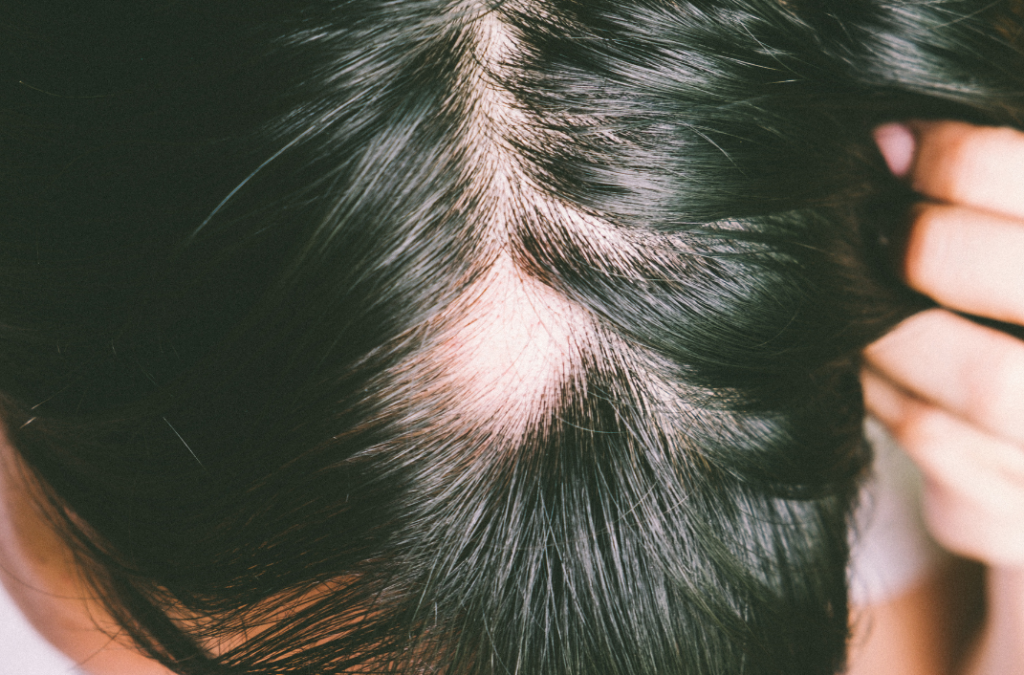
Oestrogen exists in men too, just in smaller amounts, and it plays a role in overall hormonal balance. When oestrogen levels shift too far in either direction, hair health can sometimes be affected.
Higher oestrogen levels may occur with age, certain liver conditions, or changes in body fat distribution. Lower levels can also disrupt the hair growth cycle. In both cases, the issue is rarely isolated, and symptoms often overlap with fatigue, mood changes, or metabolic shifts.
Because oestrogen interacts with testosterone and other hormones, its influence on hair tends to be indirect rather than a single clear cause.
Cortisol and Stress Hormones
Chronic stress has a habit of showing up physically, and hair is no exception. Cortisol, the body’s main stress hormone, rises during prolonged stress and can interfere with normal hair growth cycles.
One result is telogen effluvium, a type of shedding where more hairs than usual enter the resting phase. This often appears as diffuse thinning rather than receding hairlines, and it may happen months after the stressful period began.
While stress-related shedding is often temporary, ongoing high cortisol levels can keep hair from returning to its usual growth rhythm. Addressing stress does not guarantee regrowth, yet it often supports healthier hormonal balance overall.
Thyroid Hormones
The thyroid gland helps regulate metabolism, energy use, and cell turnover, including in hair follicles. Both an underactive thyroid and an overactive one can affect hair growth.
When thyroid hormones fall outside their usual range, hair may become dry, brittle, or thin across the scalp rather than in a pattern. This type of hair loss is usually accompanied by other symptoms, such as unexplained weight changes, temperature sensitivity, or persistent tiredness.
Because thyroid-related hair loss rarely appears on its own, medical testing is usually the only reliable way to identify it.
Insulin and Metabolic Hormones
Insulin helps control blood sugar levels, yet it also interacts with other hormones involved in inflammation and growth. Persistently high insulin levels, often linked to insulin resistance, can disrupt hormonal balance more broadly.
Research into insulin and hair loss in men is still developing, although metabolic health appears to influence how hormones behave in the scalp. In some cases, insulin resistance may indirectly contribute to thinning by altering androgen activity or increasing inflammation.
Rather than acting as a single trigger, insulin tends to be part of a wider metabolic picture that affects overall health, including hair.
How Hormonal Imbalances Trigger Hair Thinning
Hair growth depends on several hormones working together, which is why thinning rarely has one simple cause. When balance shifts, the scalp can respond in different ways.
Common hormonal disruptions linked with thinning include:
- Increased sensitivity of hair follicles to DHT
- Prolonged elevation of stress hormones like cortisol
- Thyroid hormone levels outside the normal range
- Metabolic changes linked to insulin imbalance
Because these factors overlap and influence each other, self-diagnosis often leads to frustration. A structured clinical review helps bring clarity, especially when pharmacists can look at symptoms in context rather than in isolation.
When to Seek Medical Advice for Hormonal Hair Loss
Hair thinning that progresses steadily, appears suddenly, or comes with other physical symptoms is usually worth discussing with a clinician. Changes in energy levels, weight, mood, or sleep alongside hair loss can suggest an underlying hormonal issue.
A professional review allows for proper assessment, which may include blood tests or a broader health discussion. Through WePrescribe, our pharmacists are available to guide people through this process, answer questions clearly, and help decide whether further investigation or treatment discussion makes sense.
If you are exploring support for hair loss, discreet online consultations can offer a practical starting point. If you have questions or want to understand how the process works, you can also contact us to speak with the team and take things from there.