

Noticing extra hair on your pillow or in the shower can feel unsettling, but some shedding is completely normal.
Understanding the normal hair loss amount male adults experience each day helps keep things in perspective. Hair naturally grows, rests, and renews, so mild shedding is usually part of a healthy cycle.
This guide explains what’s typical, the common factors that influence daily hair loss in men, and when it might be worth seeking general professional advice.
The Hair Growth Cycle
Every strand of hair on your head follows its own natural rhythm of growth, rest, and renewal.
Getting to grips with this process helps make sense of why shedding happens and why it is rarely a sign of anything unusual. The hair growth cycle explained simply comes down to three main stages that repeat continuously throughout life.
The first, known as the growth or anagen phase, is when hair develops from the follicle beneath the scalp and lengthens over several years. Next comes the catagen or transitional stage, a short resting period before the hair finally enters the telogen phase. During this final stage, the old hair loosens and naturally falls out, allowing a new one to grow in its place.
Because not all follicles move through these stages at the same time, some daily shedding is entirely expected and keeps the cycle balanced.
Daily Hair Shedding Expectations
It can be surprising to realise how much hair we naturally lose each day, yet in most cases this is part of a healthy cycle.
For many men, shedding between fifty and one hundred hairs daily is considered within the normal hair loss amount that male adults experience. This figure can vary slightly depending on factors such as hair texture, washing habits, and general health.
Because everyone’s hair behaves differently, it is better to notice long-term patterns rather than focus on daily changes. A little more hair in your brush after washing or styling is not automatically a concern. Mild variations in male hair shedding can happen for many harmless reasons.
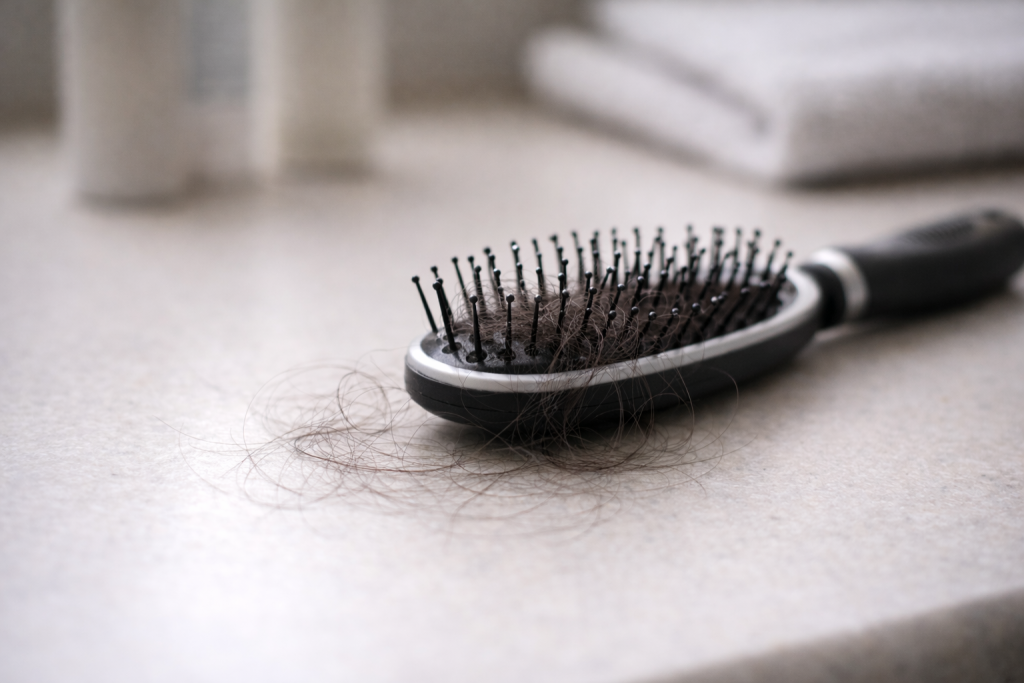
If you find yourself asking how much hair loss is normal, remember that consistency matters more than the count. Steady, manageable shedding is typically part of the body’s routine renewal rather than a sign of an underlying issue.
Genetic Factors in Male Hair Loss
Genetics play a major role in shaping how your hair naturally changes over time. Some men notice a gradual thinning across the crown or a receding hairline that mirrors patterns seen in their family. This type of change, often called male pattern hair thinning, is one of the most common reasons for hair loss in men.
Inherited traits can influence both how quickly and where the hair becomes finer, but they do not always mean complete loss. Many men experience only mild or slow changes that stabilise as the years go on.
While genetics are outside our control, understanding them can ease worry. Not every man with a family history of thinning will experience it to the same extent. Observing your own pattern and knowing it might have a hereditary link can help you distinguish between typical variation and more noticeable change.
Age-Related Changes
As we grow older, it’s natural for hair to change in texture, density, and growth rate. What might feel like new thinning is often a gradual shift that comes with ageing rather than a sudden problem. Many men notice that individual strands become finer or lighter, giving the impression of reduced volume even when growth continues.
These age-related differences are common and usually reflect the body’s slower cell renewal processes. Slightly slower growth or mild shedding does not necessarily indicate a condition that needs treatment. In fact, a modest amount of daily hair loss in men over time is often part of this steady adjustment.
Recognising that age naturally influences hair can make these changes easier to accept and help reduce unnecessary concern about what is, for most men, a normal part of getting older.
When Shedding Becomes a Concern
Some fluctuation in hair shedding is completely normal, but at times it might feel more noticeable than usual. When you start to see sudden or patchy loss, or if the scalp itself appears different, it could be when to worry about hair loss and consider speaking with a professional. This is not always a sign of something serious, but getting reassurance from a trusted expert can help clarify what’s happening.
Sometimes increased shedding follows stress, illness, or a change in routine, and often it settles naturally after a short while. Other times, it may continue more steadily. Paying attention to gradual shifts rather than single episodes gives a clearer sense of whether the pattern is changing.
If hair changes begin to affect confidence or cause concern, arranging a general assessment can offer peace of mind and practical next steps without the need for immediate intervention.
How Lifestyle Influences Hair Health
Everyday habits can influence how healthy your hair looks and feels. Factors such as diet, stress, sleep, and styling choices often play a part in how strong and full the hair appears over time. Understanding the link between lifestyle and hair health can help make small, practical changes that support natural balance.
A diet rich in varied nutrients, regular exercise, and good hydration all contribute to overall well-being, which in turn reflects in hair condition. Chronic stress, smoking, or lack of sleep may cause temporary dullness or shedding, though these effects are usually reversible with lifestyle improvements.
It’s also helpful to treat the scalp gently, avoiding excessive heat or tight hairstyles that can cause breakage. By maintaining general health and managing everyday stress, hair is more likely to remain resilient and retain its natural texture and shine.
When to Seek Professional Support
If changes in your hair begin to feel worrying or affect your confidence, it might help to talk with a qualified professional. A general practitioner or hair specialist can assess what’s happening and explain possible reasons for hair loss in men without pressure to pursue treatment. Often, simply understanding the pattern brings reassurance.
Seeking advice does not always mean something is wrong. It can just be a way to better understand your own hair and rule out any temporary causes. Professionals can offer balanced, evidence-based guidance and, if needed, suggest further steps.

At WePrescribe, we know the difficulty in making those first steps towards dealing with hair loss and pride ourselves on how we sensitively, but proactively, handle and tackle the situation directly, so feel free to contact us for more information and support.
By taking notice of your hair over time and seeking help when something feels different, you can make informed choices and feel more comfortable with the natural changes that come with age and genetics.