

People use period delay tablets for all sorts of reasons, like travel, weddings, or exams, where timing matters a little more than usual. If you’ve recently taken them, you might be wondering what to expect when stopping period delay tablets and how your cycle may respond next.
These tablets are prescription-only medicines in the UK, which means they’re only suitable after a clinical assessment. Once you stop taking them, your body begins to return to its usual hormonal rhythm, though the experience can vary slightly from person to person.
Consultation services such as ours at WePrescribe, for example, tend to include this kind of guidance as part of the whole process, so you know what to expect both during and after use.
Understanding what may happen next can help you feel more prepared, especially if changes in bleeding or timing feel unfamiliar at first.
Your Period Will Usually Return Within a Few Days
For many people, bleeding tends to begin within two to four days after stopping period delay medication. This happens as progesterone levels drop, which signals the body to shed the uterine lining.
This bleed is sometimes called a withdrawal bleed rather than a natural period, though it can look and feel quite similar. The timing can shift a little depending on how your body responds, so a short delay does not always mean anything is wrong.
If your period does not start straight away, it may simply reflect normal variation in how your hormones adjust.
You May Experience Light Spotting Before Full Bleeding
Some people notice light spotting before their period fully starts. This might appear as small amounts of blood or brown discharge, which can feel a bit unexpected if you are not looking out for it.
Spotting after stopping tablets does not happen to everyone, though it can be part of the transition as hormone levels change. It usually settles on its own once full bleeding begins.
Keeping track of what you notice can be helpful, especially if patterns feel slightly different from your usual cycle.
Your Next Cycle May Be Slightly Earlier or Later Than Usual
After a withdrawal bleed, your next natural cycle may arrive a little earlier or later than you expect. This happens because your body is re-establishing its usual hormone signals.
Cycle changes after delaying your period are generally short-lived. Many people find their cycle returns to its usual pattern by the following month, though small shifts can still happen from time to time.
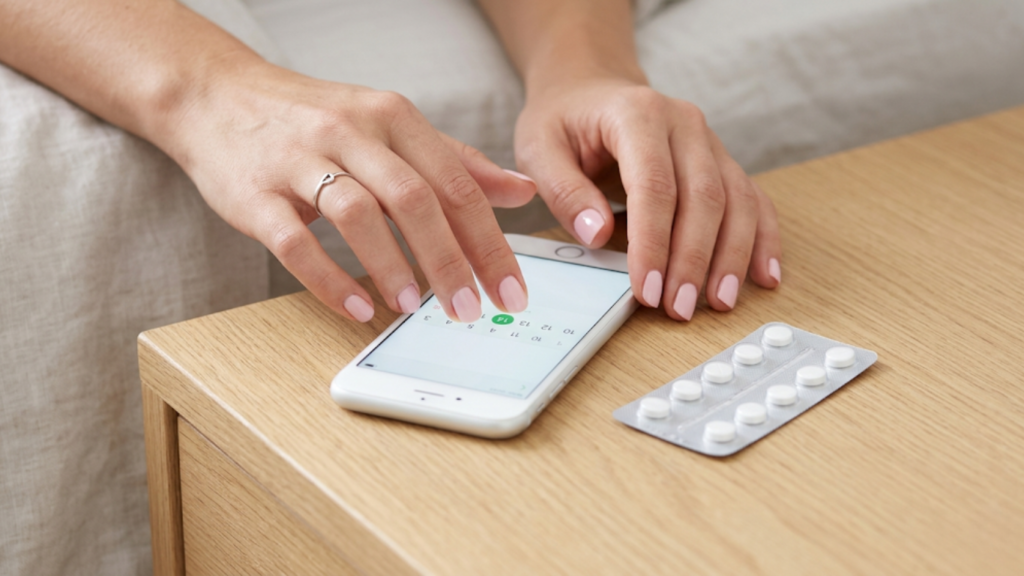
If your cycle feels slightly out of sync at first, this is typically part of the adjustment rather than a longer-term change.
Temporary Changes in Flow or Cramping
You might notice some differences in how your period feels during the next cycle. These changes are usually mild and short-term, though they can vary between individuals.
- Flow may feel slightly heavier or lighter than expected
- Cramps might seem more noticeable than usual
- Some people experience milder symptoms than they are used to
These variations tend to settle as your cycle returns to its usual rhythm.
Hormone Levels Will Gradually Settle Back to Normal
Once you stop taking the tablets, your body resumes its natural hormone production. This involves the brain and ovaries working together to regulate the menstrual cycle again.
Current clinical understanding suggests there is no evidence of long-term hormone disruption when period delay tablets are used appropriately under medical supervision. The adjustment period is usually brief, though each person’s timing can differ slightly.
If anything feels out of the ordinary for longer than expected, it may be worth checking in with a healthcare professional.
You Might Notice Mild Side Effects Fading
If you experienced any side effects while taking the tablets, these may begin to ease once you stop. The timing can vary, though improvements are often noticed over a few days.
- Breast tenderness may reduce
- Nausea can settle
- Headaches might become less frequent
- Mood changes may ease
Not everyone experiences side effects, and for those who do, symptoms are usually temporary rather than ongoing.
Your Fertility Should Return to Your Normal Baseline
Ovulation typically resumes after stopping treatment, which means your fertility returns to its usual baseline. Period delay tablets do not act as contraception, so it is still possible to become pregnant once your cycle restarts.
If you are thinking about longer-term planning, including contraception or menstrual regulation, you can explore contraception and menstrual management services, which may offer more consistent options depending on your needs.
If your cycles remain irregular or you are planning a pregnancy, speaking with a GP can help clarify what is normal for you.
Premenstrual Symptoms May Feel Slightly Different in the Next Cycle
Your next cycle may bring premenstrual symptoms that feel a little different from what you are used to. This might include changes in timing or intensity.
Some people notice symptoms appearing slightly earlier or later, while others find they feel a bit more noticeable. These shifts are usually temporary and tend to settle as your cycle stabilises.
If symptoms feel unusually severe or persistent, it may be worth seeking advice.
Your Cycle Length May Take One Month to Fully Regulate
It can take one full cycle for your period to return to its usual timing. Small variations in cycle length are common during this phase, especially after stopping period delay medication.
Most people find their cycle becomes more predictable again within one to two months. If irregular patterns continue beyond this, a medical review may help rule out other causes.
Paying attention to your cycle during this time can make it easier to spot when things return to normal.
What to Do If You Plan to Use Period Delay Tablets Again
Some people consider using tablets again for future events. Occasional use may be appropriate, though repeated or frequent use should always be reviewed by a prescriber.

If you are thinking about using period delay tablets again, a new consultation is required to assess suitability and check for any changes in your health. Services like WePrescribe are structured in a way that allows this to be reviewed safely each time, rather than assuming the same approach will always be appropriate.
You may also want to explore broader options through contraception and menstrual management services, especially if cycle control is something you need more regularly.
How to Monitor Your Cycle After Stopping Treatment
Keeping track of your cycle after stopping treatment can give you a clearer picture of how your body is adjusting. Even small notes can help you feel more in control.
- Track when your first bleed starts
- Note any changes in flow or duration
- Record any PMS symptoms
- Monitor overall cycle length
It is sensible to seek medical advice if:
- No bleeding occurs within seven days after stopping tablets
- Bleeding feels unusually heavy
- Pain becomes severe or difficult to manage
If you’d like to understand more about safe timing and planning, you can read our guide on how to delay your period safely for additional guidance.