


Many people expect hayfever symptoms to settle once they move indoors. Despite this, sneezing, itchy eyes, and congestion can continue throughout the day, even inside homes, offices and cars.
Indoor hayfever happens because pollen does not stay outdoors. It travels through windows, ventilation systems, clothing, hair and pets, then settles onto surfaces around the home. Indoor allergens such as dust mites and mould can also add to irritation during peak pollen seasons.
Understanding how allergens move through indoor spaces can help you reduce exposure and manage symptoms more effectively.
Pollen Entering Through Windows Doors And Ventilation
Pollen can enter indoor spaces through open windows, doors and ventilation systems, particularly during spring and summer.
Even short periods with windows open may allow airborne pollen to settle onto carpets, furniture and bedding. Once indoors, particles can circulate between rooms through airflow and movement around the home.
Common entry points include:
- Open windows during warm weather
- Frequently used doors
- Air conditioning and ventilation units
- Clothes dried outdoors
Pollen levels are usually higher during early mornings and evenings, especially on warm, dry and windy days. Opening windows during these times may increase indoor exposure and make hayfever symptoms feel more noticeable indoors. Ventilation systems may continue circulating pollen particles indoors unless filters are cleaned or replaced regularly.
Dust And Soft Furnishings Holding Outdoor Allergens
Soft furnishings like carpets, curtains and bedding can trap pollen and release it back into the air over time.
Unlike hard flooring or wipe-clean surfaces, fabrics hold onto allergens for longer periods. Movement around the home can disturb these particles and spread them through the room again.
Areas where pollen commonly collects include:
- Carpets and rugs
- Curtains and blinds
- Cushions and throws
- Upholstered furniture
- Bedding and pillows
Bedrooms can become a hidden source of exposure. Pollen carried indoors during the day may settle into bedding, which helps explain why some people wake with irritated eyes or nasal congestion.
Vacuuming, changing bedding and reducing fabric clutter in sleeping areas may help lower allergen build-up during peak hayfever season.
Pets Carrying Pollen Into The Home
Pets can carry pollen on their fur and paws, bringing allergens indoors after time outside.
Dogs are particularly likely to collect pollen during walks through grass, parks or wooded areas. Once indoors, these particles transfer onto floors, sofas and bedding.
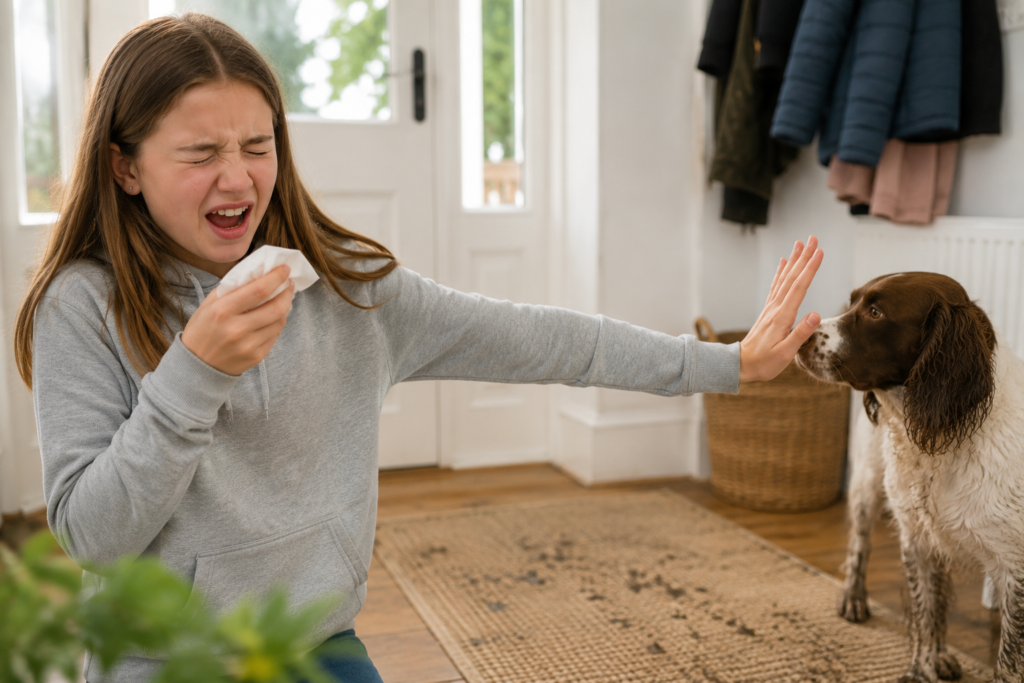
For example, a dog resting on upholstered furniture after a walk may spread pollen through several rooms within a short period.
During high pollen seasons, exposure from pets may become more noticeable in smaller or enclosed spaces.
Helpful habits include:
- Wiping paws after walks
- Brushing pets outdoors where possible
- Washing pet bedding regularly
- Keeping pets away from bedrooms if symptoms are severe
These steps may help reduce the amount of pollen settling around the home.
Clothing Hair And Shoes Bringing Allergens Indoors
Pollen can cling to clothing, hair and shoes, meaning allergens are frequently brought indoors without being noticed.
After outdoor exposure, pollen particles may transfer onto furniture, towels and bedding. Over several days, this build-up can make indoor hayfever symptoms feel more persistent.
Common examples include:
- Sitting on beds or sofas in outdoor clothing
- Leaving shoes beside carpets or soft furnishings
- Pollen settling into hair during commuting or exercise
- Jackets carrying allergens into enclosed rooms
Reducing indoor exposure may involve changing clothes after returning home, showering before bed and keeping shoes near entrances. These habits can help limit the amount of pollen spreading through frequently used spaces during peak allergy seasons.
Indoor Air Circulation Spreading Irritants Around A Room
Once indoors, pollen and allergens can continue circulating through the air, spreading irritation around enclosed spaces.
Fans, airflow systems and movement around the home can disturb settled particles and keep them airborne for longer.
Common causes of indoor circulation include:
- Standing or desk fans
- Air conditioning units
- Vacuum cleaners without effective filters
- Walking across carpeted floors
- Moving curtains or bedding
This helps explain why symptoms may continue after windows are closed. In smaller rooms with limited airflow, allergens may remain concentrated indoors throughout the day.
Some people notice stronger symptoms in bedrooms or home offices where air circulation is lower and soft furnishings collect more particles.
Mould Dust Mites And Other Indoor Triggers Adding To Symptoms
Indoor allergens like dust mites and mould can combine with pollen exposure, making symptoms feel more intense.
Hayfever is caused by pollen, but indoor environments may contain other irritants affecting the nose, eyes and airways at the same time.
Common indoor triggers include:
- Dust mites in bedding and carpets
- Damp areas encouraging mould growth
- Pet dander
- Smoke and strong fragrances
These triggers can overlap during allergy season. Someone already sensitive to pollen may react more strongly when exposed to additional irritants indoors.
The combined effect can make symptoms feel ongoing, even when outdoor pollen levels begin to fall.
Persistent or severe symptoms should be discussed with a healthcare professional to rule out other causes and identify suitable support.
Seasonal Changes That Make Indoor Exposure More Noticeable
During peak pollen seasons, even low levels of indoor exposure can trigger noticeable symptoms.
People with hayfever may become more sensitive during spring and summer because overall pollen exposure is already higher outdoors.
Weather conditions also influence indoor allergen levels. Warm, dry and windy days can increase airborne pollen, while changing weather patterns may spread smaller particles more widely.
This is why symptoms sometimes feel worse indoors on particular days despite no obvious changes inside the home itself.
What Can Help Reduce Indoor Hayfever Symptoms
Changes to your routine and home environment can help reduce indoor allergen exposure during hayfever season.
The most effective steps usually focus on managing hayfever by limiting the amount of pollen entering frequently used spaces.
Helpful measures include:
- Keeping windows closed during high pollen periods
- Showering and changing clothes after being outdoors
- Washing bedding regularly
- Vacuuming carpets and upholstery frequently
- Wiping pets down after walks
- Avoiding drying clothes outside on high pollen days
Simple daily habits often have the biggest impact when used consistently, particularly in bedrooms and other frequently used spaces.
Bedrooms may benefit most from these changes because allergens collect easily in bedding and soft furnishings.
If symptoms continue, some people may benefit from hayfever treatment options. You can also speak to a clinician for personalised advice and treatment support following a clinical assessment if appropriate.