


Many people notice changes in their hair as they get older. Hair may grow more slowly, become finer or appear less dense over time. While these changes are common with ageing, they are not the only cause of hair loss. U
Understanding what is normal can help you recognise when professional assessment may be appropriate. WePrescribe offers online hair loss consultations, where a qualified clinician can assess your symptoms and discuss suitable management options based on your individual circumstances.
Hair Growth Naturally Slows With Age
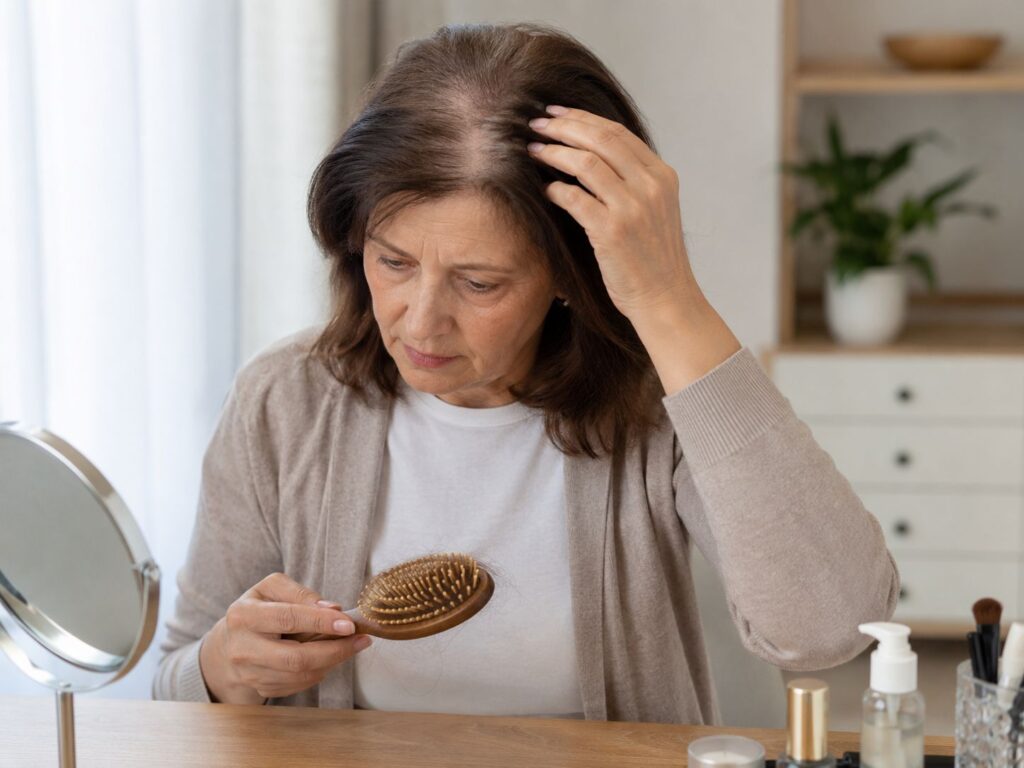
As we age, the hair growth cycle gradually changes, meaning new hairs grow more slowly and spend less time actively growing.
Every hair follows a natural cycle with three stages: anagen (growth), catagen (transition) and telogen (resting). As we get older, the growth phase shortens, giving each hair less time to grow before it sheds.
This means new hairs may appear finer, shorter and slower to replace those that are lost. Genetics, hormones and overall health also influence how quickly these changes develop, which explains why some people notice only minor thinning while others experience more visible changes.
Gradual slowing is common with age, although sudden or significant hair loss should always be professionally assessed.
Hormonal Changes Can Increase Hair Thinning
Changes in hormone levels throughout adulthood can contribute to gradual hair thinning in both men and women.
In men, increased sensitivity to dihydrotestosterone (DHT) can gradually shrink susceptible hair follicles, leading to male pattern hair loss. In women, hormonal changes during and after menopause may reduce hair volume and lead to more noticeable thinning.
These changes vary from person to person and are influenced by genetics as well as age. Persistent or worsening hair loss should not automatically be attributed to hormones alone, as other underlying causes may also require assessment by a healthcare professional.
Hair Follicles Become Smaller Over Time
Hair follicles can gradually shrink with age, producing finer and shorter hairs.
This process, known as miniaturisation, occurs when individual follicles produce progressively thinner hair shafts during each growth cycle. Instead of thick terminal hairs, the follicle begins producing finer, softer hairs that provide less coverage.
Miniaturisation is closely associated with inherited pattern hair loss, although age-related biological changes can also contribute to reduced follicle performance. As more follicles produce thinner hairs, the scalp becomes increasingly visible, particularly around the temples, crown or parting.
Because this process develops gradually, many people first notice changes when styling their hair or comparing recent photographs with older ones rather than seeing large amounts of hair fall out.
Hair Density Gradually Reduces With Age
Many people notice reduced hair density over time because fewer hairs are actively growing at any one point.
Hair naturally sheds each day as part of its normal growth cycle. As we age, replacement hairs can take longer to grow, making the scalp appear less full even if hair shedding remains normal.
Combined with finer hair shafts, this gradual change can make partings look wider or hairstyles feel thinner. If thinning continues or becomes more noticeable, some people choose to discuss their concerns through a hair loss medication consultation, where a clinician can assess the cause and explain whether management options may be appropriate following an individual clinical assessment.
Genetics Become More Noticeable as You Get Older
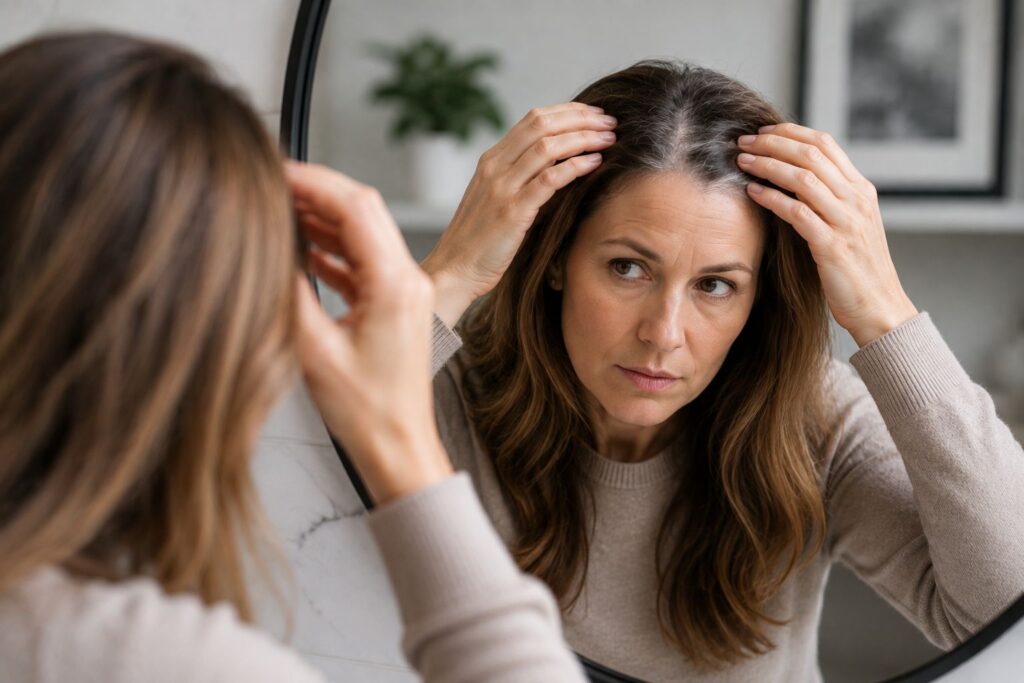
Inherited patterns of hair loss often become more noticeable with age.
Your genes influence how your hair follicles respond to hormonal changes throughout life. If close family members have experienced hair thinning, you may be more likely to notice similar changes as you get older.
Male pattern hair loss commonly affects the hairline and crown, while female pattern hair loss usually causes gradual thinning across the top of the scalp. The age at which these changes begin, and how quickly they progress, varies between individuals.
Family history increases the likelihood of pattern hair loss, although it does not determine exactly how it will develop.
Medical Conditions Become More Common With Age
Certain medical conditions that become more common with age can also affect hair growth.
Although gradual thinning is common, hair loss is not always caused by ageing. Conditions such as thyroid disorders, nutritional deficiencies and some autoimmune conditions can affect the hair growth cycle. Certain medications may also contribute to hair thinning.
Hair loss linked to an underlying condition may develop differently from age-related changes, appearing more suddenly or alongside other symptoms. It is important not to self-diagnose. A healthcare professional can assess your medical history, symptoms and pattern of hair loss to determine whether further investigation or appropriate management is needed.
Lifestyle Factors Can Have a Greater Impact on Hair Health
Nutrition, stress, smoking and general health can all influence the condition of your hair over time.
Hair relies on a steady supply of nutrients to support normal growth. A balanced diet containing adequate protein, iron, zinc and essential vitamins helps maintain healthy hair follicles. Poor nutrition may contribute to weaker hair or increased shedding in some individuals.
Stress can also affect the hair growth cycle. Following significant illness, emotional stress or major life events, some people experience temporary shedding several months later. Although this type of hair loss is usually reversible, recovery can take time.
Other lifestyle factors that may influence hair health include:
- Smoking, which may affect blood flow to hair follicles
- Poor-quality sleep
- Excessive heat styling or harsh chemical treatments
- Tight hairstyles that place repeated tension on the hair
- Managing long-term health conditions
While healthy habits cannot prevent every type of hair loss, they help support overall scalp health and create the best environment for normal hair growth.
Early Assessment May Help Preserve Existing Hair
Seeking advice early may help identify the cause of hair loss and widen the range of management options available.
Many forms of hair loss develop gradually, making changes easy to overlook until thinning becomes more obvious. Seeking professional advice at an earlier stage allows a clinician to assess whether your hair changes are consistent with normal ageing or whether another cause should be considered.
During an assessment, a clinician will usually consider:
- Your age and family history
- How long the hair changes have been present
- The pattern of thinning
- Any recent illnesses or significant life events
- Current medications
- Your general health and medical history
Following an assessment, they can explain whether monitoring, lifestyle changes, further investigation or treatment may be appropriate based on your individual circumstances. Treatment outcomes vary between individuals, and no option can guarantee hair regrowth.
When to Speak to a Healthcare Professional About Hair Loss
Sudden, severe or unexplained hair loss should be assessed by a healthcare professional.
Although gradual thinning with age is common, some changes may indicate another underlying cause.
Consider seeking advice if you notice:
- Rapid hair loss over a few weeks
- Patchy areas of hair loss
- Redness, pain, itching or scaling of the scalp
- Hair loss after starting a new medication
- Persistent shedding following illness
- Hair loss alongside symptoms such as fatigue or unexplained weight changes
If you remain concerned about ongoing hair thinning, a video consultation with a qualified clinician can help identify the likely cause and discuss appropriate next steps. For general questions about WePrescribe’s services, you can also contact us.