


Urinary tract infections (UTIs) can affect different parts of the urinary system, and the location of the infection influences the symptoms, severity and urgency of treatment. Lower UTIs usually involve the bladder or urethra, while upper UTIs affect the kidneys and require prompt medical assessment.
Understanding the differences can help you recognise when to seek routine clinical advice and when urgent care is needed. WePrescribe offers online consultations for appropriate uncomplicated lower UTIs following clinical assessment.
Location Within the Urinary Tract
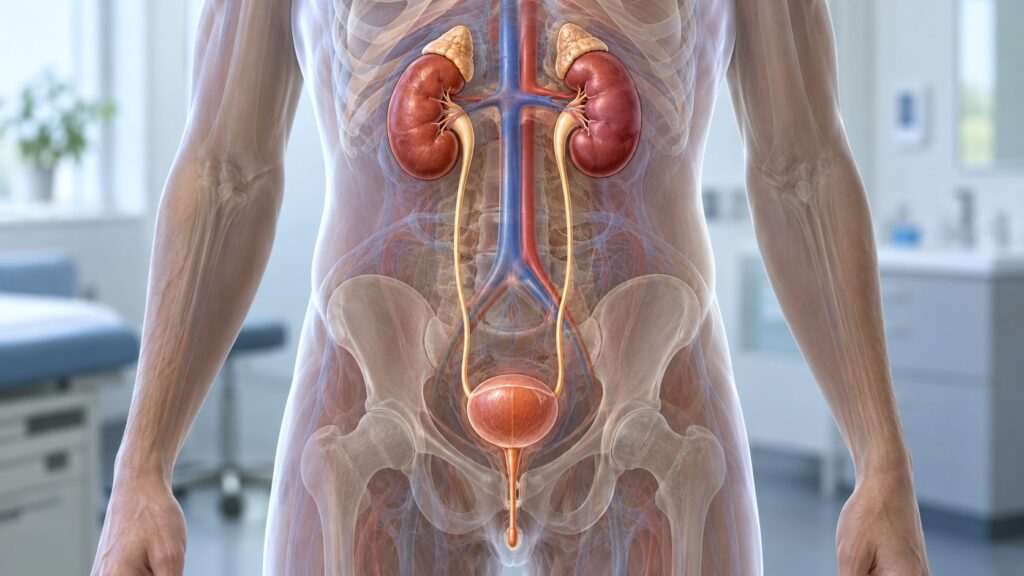
A lower UTI affects the bladder or urethra, whereas an upper UTI involves one or both kidneys.
The urinary tract is made up of four main structures that work together to produce, transport and store urine.
| Lower Urinary Tract | Upper Urinary Tract |
| Urethra | Kidneys |
| Bladder | Kidneys and surrounding tissue |
Urine is produced in the kidneys before travelling through the ureters into the bladder. The bladder stores urine until it leaves the body through the urethra.
Most urinary tract infections begin in the lower urinary tract. If bacteria travel further upwards through the urinary system and reach the kidneys, the infection becomes an upper urinary tract infection, also known as pyelonephritis. Kidney infections are generally more serious because they affect an organ responsible for filtering waste products from the bloodstream.
Organs Affected
The organs involved influence both symptoms and the urgency of treatment.
A lower urinary tract infection commonly affects:
- The bladder, known as cystitis
- The urethra, known as urethritis
An upper urinary tract infection affects one or both kidneys. The kidneys perform essential functions, including filtering blood, balancing fluids and removing waste products. Infection affecting these organs is therefore more likely to produce symptoms throughout the body rather than symptoms limited to the urinary tract.
Although lower UTIs are generally less severe, both types require an accurate diagnosis to determine the most appropriate management.
Common Urinary Symptoms
Burning when passing urine and increased urinary frequency are more typical of lower UTIs, although these symptoms may also occur with upper infections.
Common symptoms include:
- Burning or stinging when passing urine (dysuria)
- Needing to pass urine more frequently
- A sudden urge to urinate
- Passing small amounts of urine
- Cloudy urine
Kidney infections can cause the same urinary symptoms alongside signs of more widespread illness. Because symptoms overlap, professional assessment is important. If your symptoms appear consistent with an uncomplicated lower UTI, WePrescribe’s UTI medication service allows a qualified clinician to assess whether online treatment is appropriate. Suspected kidney infections require urgent medical assessment rather than remote treatment.
Presence of Fever and Chills
Fever, chills and feeling generally unwell are more commonly associated with kidney infections than lower UTIs.
Unlike a bladder infection, an upper urinary tract infection can affect the whole body. This happens because the infection involves the kidneys rather than remaining confined to the lower urinary tract.
Symptoms suggesting a kidney infection may include:
- Fever
- Chills or shaking episodes
- Sweating
- Feeling generally unwell
- Loss of appetite
A person with a straightforward lower UTI does not usually develop a high temperature or significant systemic illness. When these symptoms occur alongside urinary symptoms, they should be assessed promptly by an appropriate healthcare service.
Location and Severity of Pain

Pain location often differs between lower and upper UTIs, although symptoms can overlap.
A lower urinary tract infection usually causes discomfort around the:
- Lower abdomen
- Bladder
- Pelvic area
The discomfort is commonly described as pressure, tenderness or aching rather than severe pain.
Kidney infections typically produce pain higher in the body. This is known as flank pain, occurring around the side of the back beneath the ribs where the kidneys are located. The pain may affect one or both sides and can become increasingly uncomfortable as the infection progresses.
Healthcare professionals also assess for tenderness over the kidneys during examination, as this can provide additional evidence that the infection involves the upper urinary tract.
Pain alone cannot confirm the diagnosis, although its location provides valuable information when considered alongside other symptoms.
Changes to Urine
Both lower and upper UTIs may change the appearance or smell of urine.
Common changes include:
- Cloudy urine
- A stronger-than-usual odour
- Blood in the urine
- Darker urine if dehydration is present
These changes occur because infection causes inflammation within the urinary tract. Blood in the urine can occur with either type of UTI and does not necessarily indicate that the kidneys are affected.
Changes in urine appearance should always be considered alongside other symptoms rather than viewed in isolation.
Impact on General Health
Upper UTIs usually have a greater impact on overall health than lower UTIs.
Many people with an uncomplicated bladder infection remain well apart from urinary discomfort. Daily activities may feel inconvenient, although significant illness is uncommon.
Kidney infections are more likely to cause wider symptoms affecting the whole body, including:
- Fatigue
- Nausea
- Vomiting
- Reduced appetite
- General weakness
These symptoms reflect a more significant infection and should prompt timely medical assessment, particularly when accompanied by fever or flank pain.
Risk of Complications
Kidney infections are more likely to cause complications if left untreated.
A lower urinary tract infection usually remains confined to the bladder or urethra and responds well to appropriate treatment. An upper urinary tract infection carries a greater risk because the kidneys are directly involved.
Without timely treatment, a kidney infection can lead to complications such as:
- Reduced kidney function
- Kidney abscesses in some cases
- Infection spreading into the bloodstream (sepsis)
- Hospital admission for intravenous treatment
Most people recover well when kidney infections are recognised and treated promptly. Seeking medical assessment early helps reduce the likelihood of complications developing.
Need for Urgent Medical Assessment
Certain symptoms require prompt medical assessment rather than self-management.
Seek urgent medical advice if you have:
- Fever or chills
- Flank or severe back pain
- Persistent nausea or vomiting
- Confusion, particularly in older adults
- Symptoms during pregnancy
- Feeling severely unwell
These symptoms may suggest a kidney infection or another condition requiring urgent treatment. Healthcare professionals assess your symptoms, medical history and overall health to determine the most appropriate next steps. Prompt assessment can help reduce the risk of complications.
Diagnostic Tests That May Be Required
Healthcare professionals may recommend urine tests and, in some cases, additional investigations.
Assessment starts with your symptoms and medical history. Depending on the findings, tests may include:
- Urine dipstick testing
- Urine culture to identify bacteria
- Blood tests if a kidney infection is suspected
- Imaging, such as an ultrasound or CT scan, if complications or structural problems are a concern
The tests recommended depend on your symptoms and clinical assessment. Not everyone with a suspected UTI will need additional investigations beyond an initial urine assessment.
Typical Treatment Pathways
Treatment depends on which part of the urinary tract is affected and how severe the infection is.
Many uncomplicated lower UTIs can be managed in the community following assessment by a healthcare professional. Kidney infections require more urgent assessment because they carry a greater risk of complications and may need closer monitoring or hospital treatment. The most appropriate approach depends on your symptoms, medical history and clinical findings. Treatment decisions are made following clinical assessment, rather than the location of the infection alone, to ensure care is appropriate for each individual.
Expected Recovery and Follow-Up
Most uncomplicated lower UTIs improve with appropriate treatment, while kidney infections usually require closer follow-up.
Symptoms of a lower UTI often begin to settle within a few days of appropriate management. If symptoms persist, worsen or return, further assessment may be needed. Recovery from a kidney infection can take longer because the kidneys are affected, and follow-up may be recommended to confirm the infection has resolved.
Common Misconceptions About Lower and Upper UTIs
Several misconceptions can delay appropriate care.
- All UTIs are the same. Lower and upper UTIs affect different parts of the urinary tract and differ in severity.
- You can identify the type yourself. Symptoms frequently overlap, making professional assessment important.
- Every kidney infection starts as a bladder infection. This is not always the case.
If you’re experiencing urinary symptoms, a qualified clinician can assess your symptoms and recommend the most appropriate next steps. An online video consultation may be suitable for some uncomplicated lower UTIs following clinical assessment.
Fever, flank pain, persistent vomiting, confusion or feeling significantly unwell require urgent medical assessment, as these symptoms may suggest a kidney infection. If you have questions about WePrescribe’s services, please contact us for general service enquiries.