


IBS and IBD can cause similar digestive symptoms, although they are distinct conditions. Inflammatory bowel disease (IBD) involves inflammation of the digestive tract, whereas irritable bowel syndrome (IBS) does not cause the same inflammatory damage.
Understanding the difference between IBS and IBD helps explain why their symptoms, diagnosis, potential complications and treatment approaches differ. Neither condition can be identified reliably through symptom comparisons alone.
IBS vs IBD: A Quick Comparison
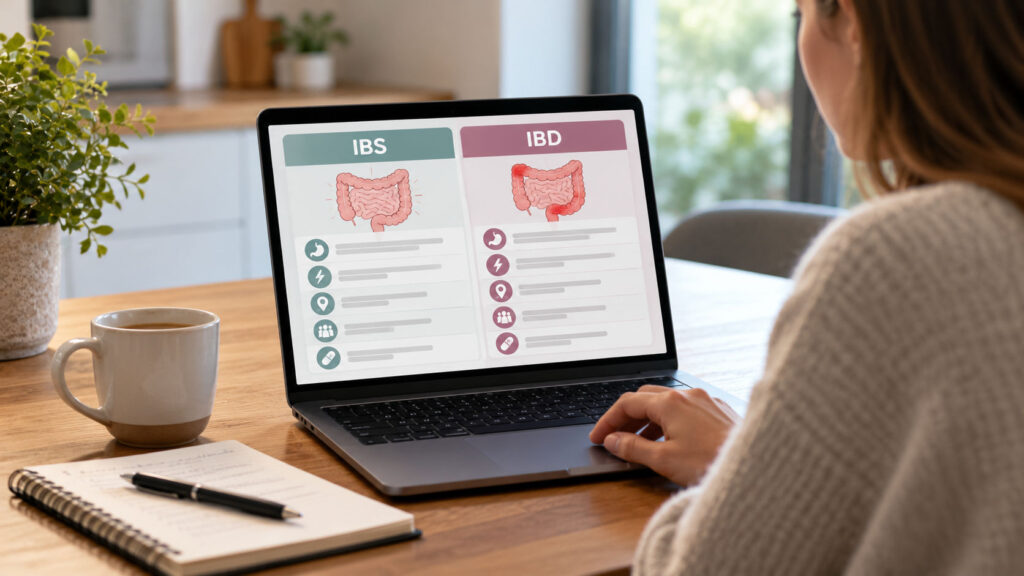
IBS and IBD can both affect bowel habits and cause abdominal discomfort. Their underlying processes, potential complications and clinical management are different.
| Area | IBS | IBD |
| Full name | Irritable bowel syndrome | Inflammatory bowel disease |
| Condition type | Disorder of gut-brain interaction | Group of inflammatory conditions |
| Inflammation | Does not cause IBD-type inflammation | Causes digestive tract inflammation |
| Bowel damage | Does not cause inflammatory tissue damage | Can cause ulcers and tissue damage |
| Symptoms | Pain, bloating, constipation or diarrhoea | Pain, diarrhoea, fatigue and sometimes bleeding |
| Diagnosis | Clinical assessment and appropriate tests | Clinical assessment, investigations and sometimes endoscopy |
| Treatment | Symptom management and lifestyle adjustments | Medical management of inflammation and symptoms |
IBD primarily includes Crohn’s disease and ulcerative colitis. Both require condition-specific assessment and management.
Can symptoms alone tell you whether you have IBS or IBD?
No. Digestive symptoms overlap considerably, and other conditions can produce similar problems. Professional assessment helps establish their cause.
What Causes IBS and IBD?
IBS and IBD develop through different biological processes, although their exact causes remain incompletely understood.
IBS involves changes in gut-brain communication, intestinal sensitivity and bowel movements. Stress, certain foods and previous digestive infections may influence symptoms.
IBD involves an abnormal immune response causing inflammation in the digestive tract. Genetic and environmental factors may contribute to its development.
Food and stress can aggravate symptoms without directly causing either condition.
Importantly, IBD is not a more severe form of IBS. They are separate conditions.
Do IBS and IBD Cause the Same Symptoms?
Both conditions can cause abdominal discomfort, diarrhoea and changes in bowel habits. Symptom patterns vary between individuals, making self-diagnosis unreliable.
Certain features, including rectal bleeding, unexplained weight loss and persistent fatigue, warrant further investigation. Their presence does not automatically establish IBD.
Abdominal Pain
Abdominal pain occurs in both conditions and may vary in intensity, location and duration.
People with IBS may notice discomfort associated with bowel movements. IBD-related pain can accompany active inflammation. These patterns are not sufficiently reliable to establish a diagnosis.
Changes in Bowel Habits
IBS may involve constipation, diarrhoea or alternating bowel patterns.
IBD frequently involves diarrhoea, sometimes containing blood or mucus, although presentations differ between Crohn’s disease and ulcerative colitis.
A significant change from your usual bowel habits deserves medical attention rather than assumptions about its cause.
The Key Difference: Inflammation and Physical Damage
IBD causes inflammation in the digestive tract, potentially damaging intestinal tissue. IBS does not cause the same inflammatory damage.
In IBD, ongoing inflammation can lead to ulcers, bleeding and structural changes. Crohn’s disease can affect different parts of the digestive tract, while ulcerative colitis affects the large bowel.
Common misconception: The absence of inflammatory damage does not mean IBS symptoms are insignificant.
IBS can considerably affect daily activities, sleep and quality of life, making appropriate assessment and support important.
Can IBS and IBD Cause Different Complications?

IBD can cause complications linked to intestinal inflammation, while IBS does not produce the same structural bowel damage.
Depending on disease activity, IBD may lead to intestinal narrowing, nutritional deficiencies or complications affecting other organs. These outcomes are not inevitable.
IBS does not cause inflammatory bowel damage, although persistent pain, unpredictable bowel movements and dietary difficulties can significantly affect daily life.
The distinction concerns physical complications, not symptom severity. Both conditions deserve appropriate assessment, management and ongoing support when needed.
How Are IBS and IBD Diagnosed?
Healthcare professionals diagnose IBS and IBD through symptom assessment, medical history and appropriate investigations.
For IBS, a GP may review symptoms and arrange blood or stool tests to exclude other conditions.
Suspected IBD may require additional investigations, including endoscopy or imaging.
Preparing for your appointment
Record useful information, including:
- When symptoms started.
- Changes in bowel habits.
- Bleeding, weight loss or fatigue.
- Relevant medicines and family history.
These details support clinical assessment without replacing professional diagnosis.
How Does Treatment for IBS and IBD Differ?
IBS treatment focuses on managing symptoms, whereas IBD treatment also aims to control intestinal inflammation and reduce the risk of complications.
For established IBS, management may involve dietary adjustments, regular physical activity, stress management and medicines selected according to symptoms.
WePrescribe provides further information about ways to manage and treat IBS.
IBD generally requires specialist-led care. Management may involve medicines that control inflammation, nutritional support, monitoring and occasionally surgery.
Treatments are not interchangeable. An IBS medicine should not be used as a substitute for investigating unexplained symptoms or managing suspected IBD.
Treatment suitability depends on individual clinical circumstances.
Does Diet and Lifestyle Management Differ?
Diet and lifestyle adjustments may support symptom management in both conditions, although recommendations depend on the diagnosis and individual nutritional needs.
For IBS, identifying personal food triggers, maintaining regular meals and reviewing fibre intake may help. More restrictive approaches should involve appropriate professional guidance.
People with IBD may have different nutritional requirements, particularly during active disease. Dietary restrictions should not replace prescribed medical care.
Stress can influence digestive symptoms. Read more about the connection between stress, anxiety and IBS.
General digestive health advice is not automatically appropriate for every bowel condition.
Can You Have IBS and IBD at the Same Time?
People with IBD can experience IBS-like symptoms, including periods when their inflammatory disease appears controlled.
These symptoms may reflect several possible causes, including functional bowel difficulties or ongoing inflammation.
A person with diagnosed IBD should therefore avoid assuming new abdominal pain or bowel changes are unrelated to their inflammatory condition.
Clinical review helps determine whether further investigations or changes to management are necessary.
When Should You Speak to a Healthcare Professional?
Seek medical advice for new, persistent or changing digestive symptoms, particularly when bowel habits differ significantly from normal.
Contact your GP if you experience ongoing abdominal pain, persistent diarrhoea, unexplained weight loss or unusual fatigue.
Rectal bleeding requires medical assessment. Contact NHS 111 for urgent advice if you experience bloody diarrhoea or worsening symptoms.
Severe abdominal pain, heavy bleeding or signs of serious illness may require emergency care.
If you have diagnosed IBS or IBD, report significant changes rather than assuming they relate to your existing condition.
For established IBS, WePrescribe provides information about IBS treatment and support, with treatment suitability subject to clinical assessment.
Symptom comparisons cannot replace professional diagnosis.